Your bathroom vanity countertop takes a beating. It deals with daily splashes, haircare products, makeup, and cleaning chemicals, all while needing to look good doing it. The material you choose affects how your bathroom feels, how much upkeep it needs, and how long it lasts.
If you are weighing your options and not sure where to start, this guide breaks down the most common vanity countertop materials, what each one does well, and where they fall short. By the end, you will have a clear picture of which direction makes the most sense for your space.
What to Think About Before Choosing a Material
Every bathroom is different. Before you fall in love with a specific stone or surface, it helps to run through a few quick questions.
- How much maintenance are you willing to do? Some materials need periodic sealing or careful cleaning routines. Others are nearly hands-off.
- What products do you use on the counter? Hairspray, acetone, bleach-based cleaners, and acidic products affect different materials differently.
- Who uses the bathroom? A primary bathroom for adults and a kids’ bathroom have very different durability needs.
- What is your budget? Material costs vary significantly, and fabrication and installation add to the total.
- What look are you going for? Natural stone has a character engineered materials can not fully replicate, but engineered options offer consistency and a wider range of looks.
Quartz: Low Maintenance, High Consistency
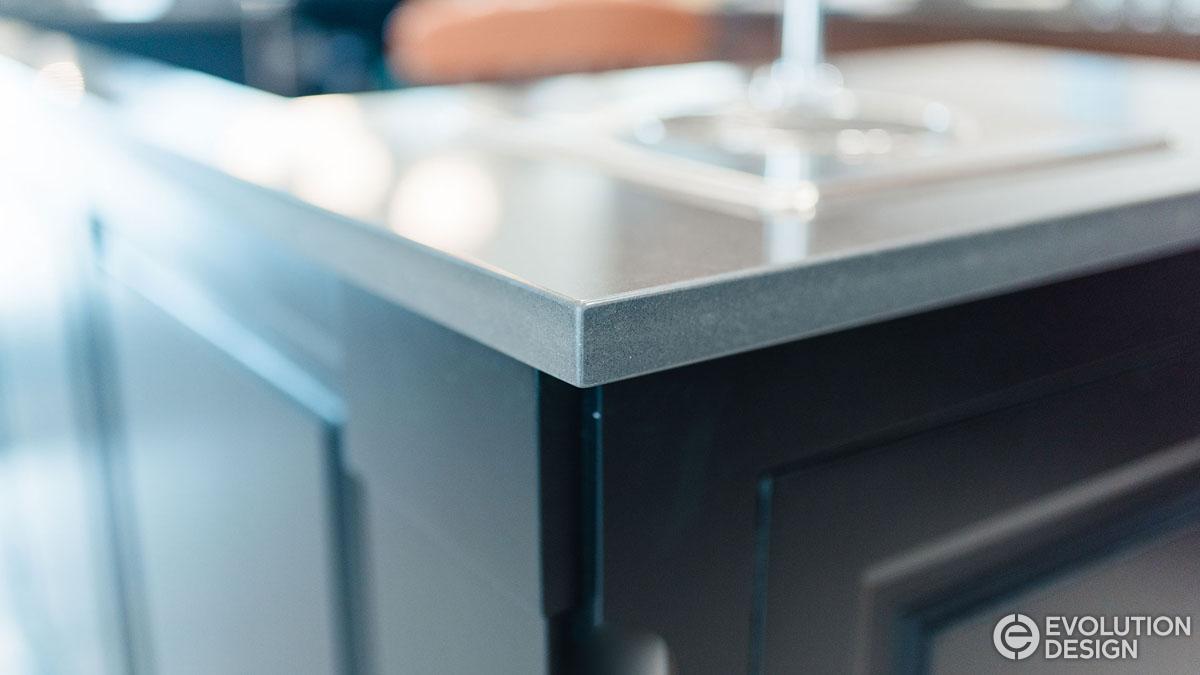
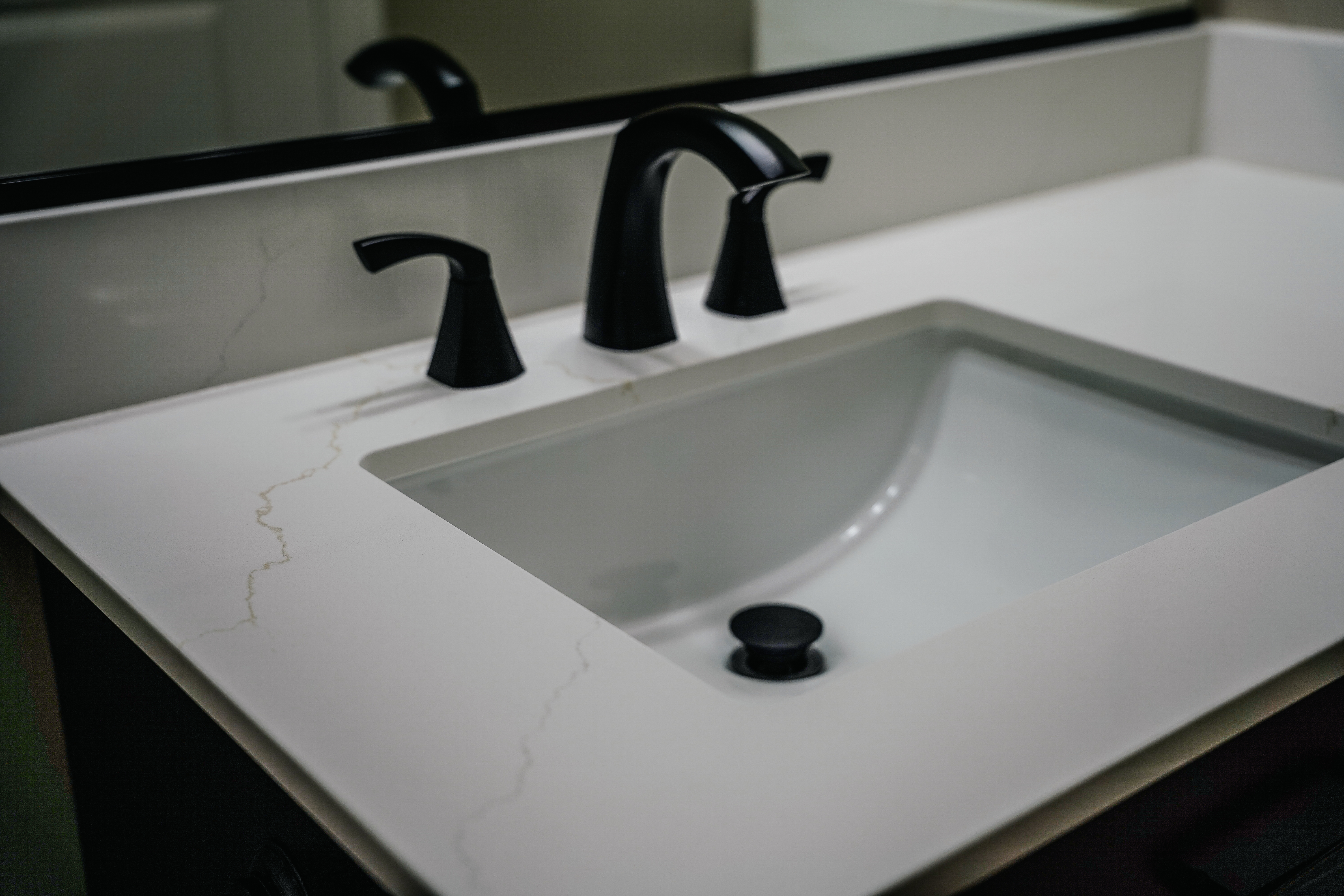
Quartz is an engineered stone made from crushed quartz bound with resin. It is non-porous, which means it does not require sealing and resists stains better than most natural stone options. It holds up well against common bathroom products and cleans up easily with soap and water.
Because it is manufactured, quartz comes in a wide range of colors and patterns, including designs that mimic the look of marble or granite. The surface is uniform, which works well in modern and contemporary bathroom designs.
Where quartz works well:
- Primary bathrooms and high-traffic vanities
- Households that want minimal upkeep
- Modern, transitional, or minimalist design styles
What to keep in mind:
- Quartz is not heat-resistant. Avoid setting hot tools directly on the surface.
- Prolonged UV exposure can cause discoloration, so it is better suited to interior bathrooms without heavy direct sunlight.
Granite: Natural Character and Long-Term Durability
Granite is a natural stone that has been a staple in both kitchen and bathroom design for decades. Each slab is unique, with its own variation in color, veining, and texture. That natural character is part of the appeal for a lot of homeowners.
Granite is extremely hard and resistant to scratches and heat. It does need to be sealed periodically, but with proper maintenance it holds up for a very long time. Many homeowners reseal once a year as a standard part of their routine.
Where granite works well:
- Homeowners who prefer the look and feel of natural stone
- Traditional, transitional, and rustic design styles
- Bathrooms where you want a one-of-a-kind appearance
What to keep in mind:
- Requires sealing on a regular schedule to prevent staining.
- Because it is a natural material, slabs vary. What you see in a showroom or sample may look slightly different from the slab used in your installation. Viewing the actual slab before fabrication is always a good idea.
Marble: Elegant Aesthetic with Higher Care Requirements
Marble has a timeless look that is hard to replicate. The soft veining and luminous quality of natural marble makes it a popular choice for master bathrooms and spa-inspired designs. It photographs beautifully and adds a sense of luxury to a space.
The trade-off is that marble requires more attention. It is porous and softer than granite or quartz, making it more vulnerable to etching from acidic products and more prone to staining if not sealed and cleaned carefully. Toothpaste, mouthwash, and certain cleaners can dull the surface over time if left to sit.
Where marble works well:
- Primary bathrooms used primarily by adults
- Homeowners who are comfortable with a higher-maintenance surface in exchange for the look
- Traditional, glam, and luxury design styles
What to keep in mind:
- Not recommended for kids’ bathrooms or spaces where a lot of products are left sitting on the surface.
- Some homeowners intentionally allow their marble to develop a patina over time. Others prefer to keep it looking new, which requires consistent care.
Porcelain: Budget-Friendly with a Lot of Options
Porcelain tile is a practical and affordable option for vanity countertops. It is hard, water-resistant, and available in an enormous range of styles, including tile that convincingly mimics the look of stone or concrete. Large-format porcelain slabs have become more popular in recent years as a cost-effective alternative to natural stone.
The main downside of traditional tile is grout lines. Grout can stain and requires more upkeep to keep clean. Larger slab-format porcelain minimizes this issue significantly.
Where porcelain works well:
- Budget-conscious projects
- Guest bathrooms and secondary spaces
- Homeowners who want a stone look at a lower price point
What to keep in mind:
- Traditional tile with grout lines can be harder to keep clean than a solid slab surface.
- Large-format porcelain slabs require skilled fabrication to cut and install properly.
A Quick Side-by-Side Comparison
Quartz: Non-porous, no sealing required, consistent appearance, wide color range. Avoid direct heat and extended UV exposure.
Granite: Natural stone, unique appearance, very durable, requires periodic sealing. Great choice if you want character and longevity.
Marble: Elegant and timeless, softer and more porous than other natural stones. Requires the most maintenance. Best in low-traffic adult bathrooms.
Porcelain: Affordable, water-resistant, many style options. Grout lines require extra cleaning. Slab format minimizes this issue.
Still Not Sure Which Direction to Go?
Choosing the right countertop material is easier when you can see and feel the options in person. At Evolution Design, we work with homeowners across Cache Valley and Northern Utah to help them find the right surface for their space, their lifestyle, and their budget.
Whether you are remodeling a primary bath, updating a guest bathroom, or building new, we are happy to walk you through your options. Contact us today to get started or stop by to see our selection.