When you choose granite, quartz, or quartzite for your kitchen, the sink is one of the first decisions that follows. And for most stone countertops, the answer is an undermount sink.
Here’s why undermount sinks pair so well with stone, how they’re installed, and what to decide before your countertops are templated.
What Is an Undermount Sink?
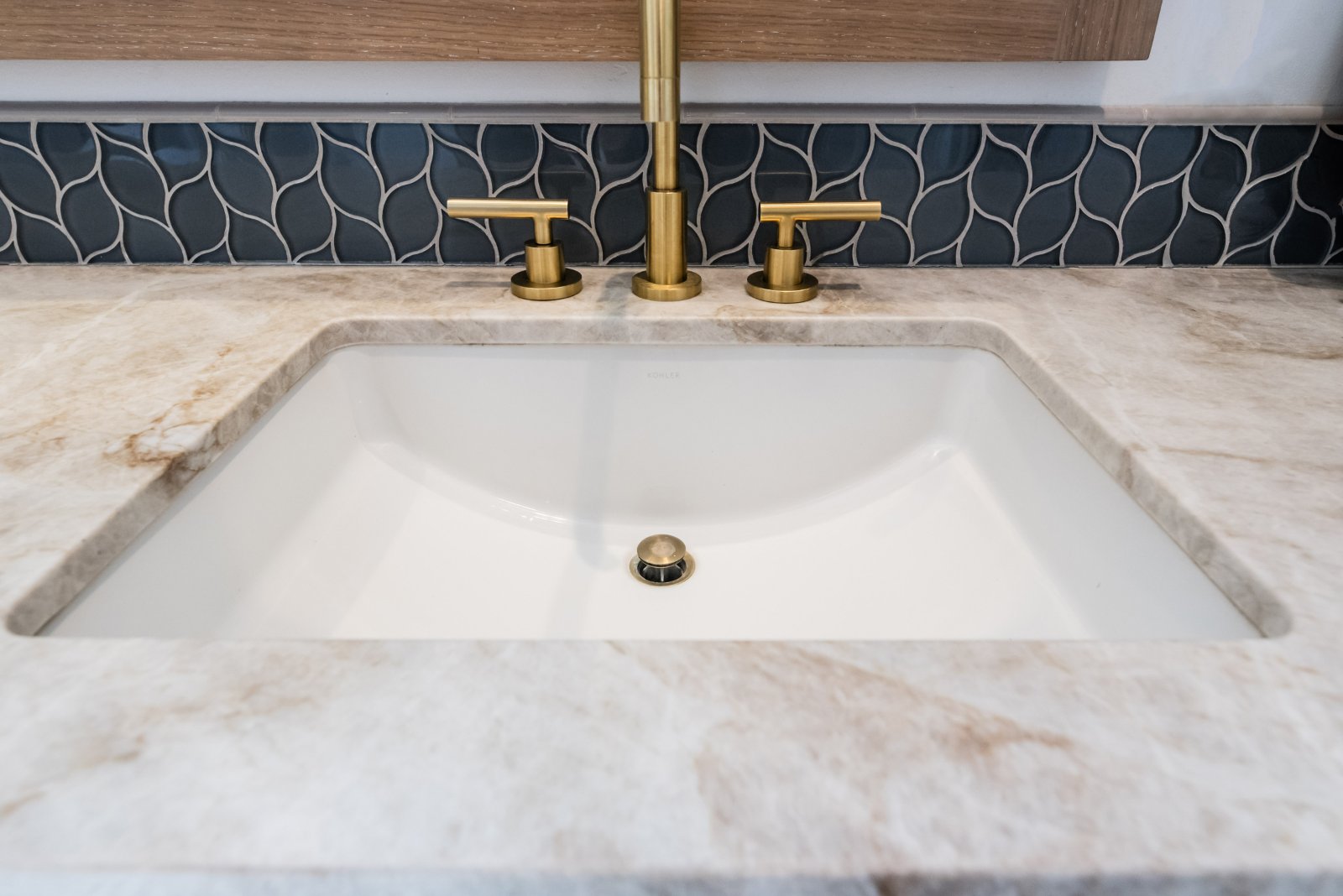
An undermount sink mounts underneath the countertop instead of sitting on top of it. The stone is cut to the shape of the sink opening, the cut edge is polished, and the sink is secured to the underside of the slab.
A drop-in sink is the opposite. It has a rim that rests on top of the counter. Drop-ins are common with laminate, but with stone they hide the polished edge and interrupt the clean surface you paid for.
Why Undermount Sinks Work So Well With Stone
- Easy cleanup. There’s no rim in the way, so you can wipe crumbs and water straight from the counter into the sink.
- A cleaner look. The countertop flows right to the sink opening, which shows off more of your stone.
- Fewer places for grime. Without a rim on top, there’s no edge for gunk to collect along.
- It suits solid surfaces. Stone is solid all the way through and can be polished on the cut edge, which is exactly what an undermount needs.
How an Undermount Sink Is Installed
During fabrication, we cut the sink opening to the exact template of your sink and polish the edge so it matches the rest of the countertop. At installation, the sink is attached to the underside of the stone and sealed so water stays where it belongs.
That’s why we need your sink before we fabricate. The cutout is made to fit that specific sink, not a generic size.
Choosing a Reveal
The reveal is how much of the sink’s edge shows around the opening. There are three common options:
- Positive reveal: a small amount of the sink rim shows around the opening.
- Negative reveal: the stone slightly overhangs the sink, hiding the rim.
- Zero or flush reveal: the stone and the sink edge line up exactly.
Each has its fans. A positive reveal is easy to keep clean. A negative reveal gives a softer look from above. A flush reveal is the cleanest line but takes the most precision. We’ll help you choose the one that fits how you use your kitchen.
Popular Undermount Sink Materials
- Stainless steel is durable, budget-friendly, and pairs with almost any countertop.
- Composite and granite composite sinks resist scratches and come in colors that complement stone.
- Fireclay gives a classic farmhouse look and works beautifully with natural stone.
You can see what we carry in our sink collection, and our post on choosing your sink and faucet covers what to think about before you buy.
What to Decide Before Templating
- Pick your sink early. We’ll need the actual sink or its exact specs to cut the opening.
- Choose your faucet and accessories. Faucet holes, soap dispensers, and air switches are drilled into the stone, so know how many you need and where they go.
- Confirm the sink base cabinet. The cabinet needs to be wide enough for the sink and ready for templating. Our post on cabinet readiness before templating explains why that matters.
- Think about the bathroom too. Undermount sinks are just as popular in vanities. See our guide to choosing a bathroom vanity countertop.
Sinks and Countertops in Logan and Cache Valley
We help homeowners across Logan, Cache Valley, and Northern Utah choose the right sink for their stone, then cut, polish, and install it as part of the countertop project. Learn more about our custom countertops in Logan.
Ready to plan your kitchen? Request a custom quote or call us at (435) 563-6443.