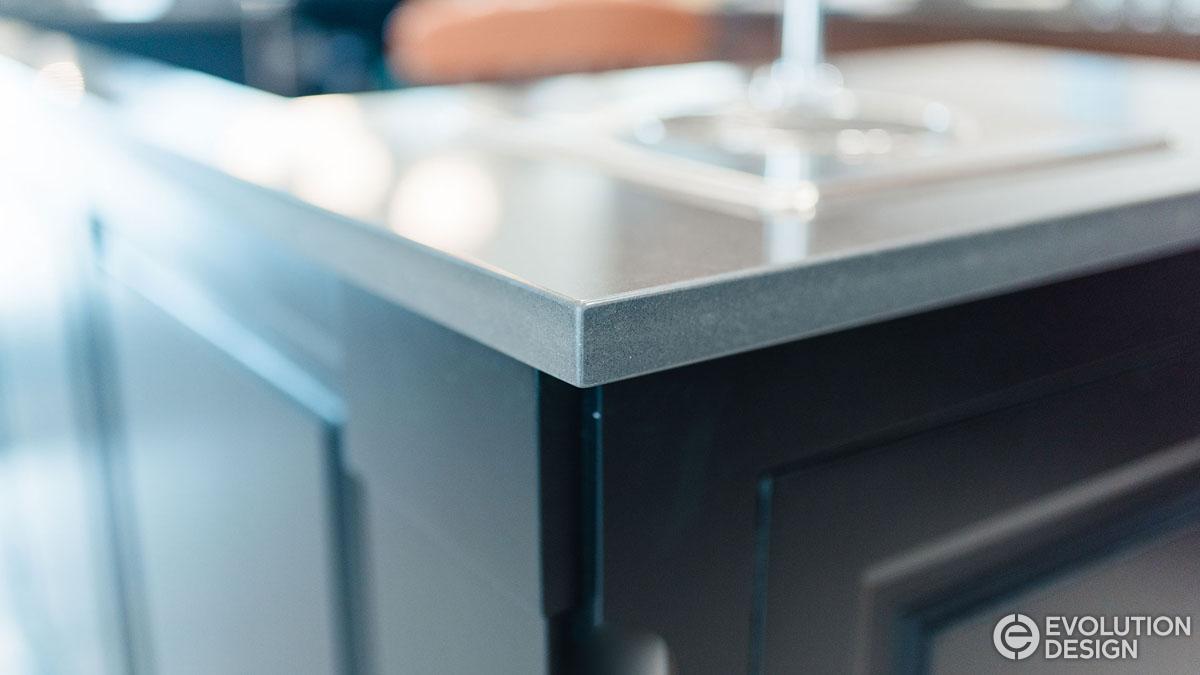
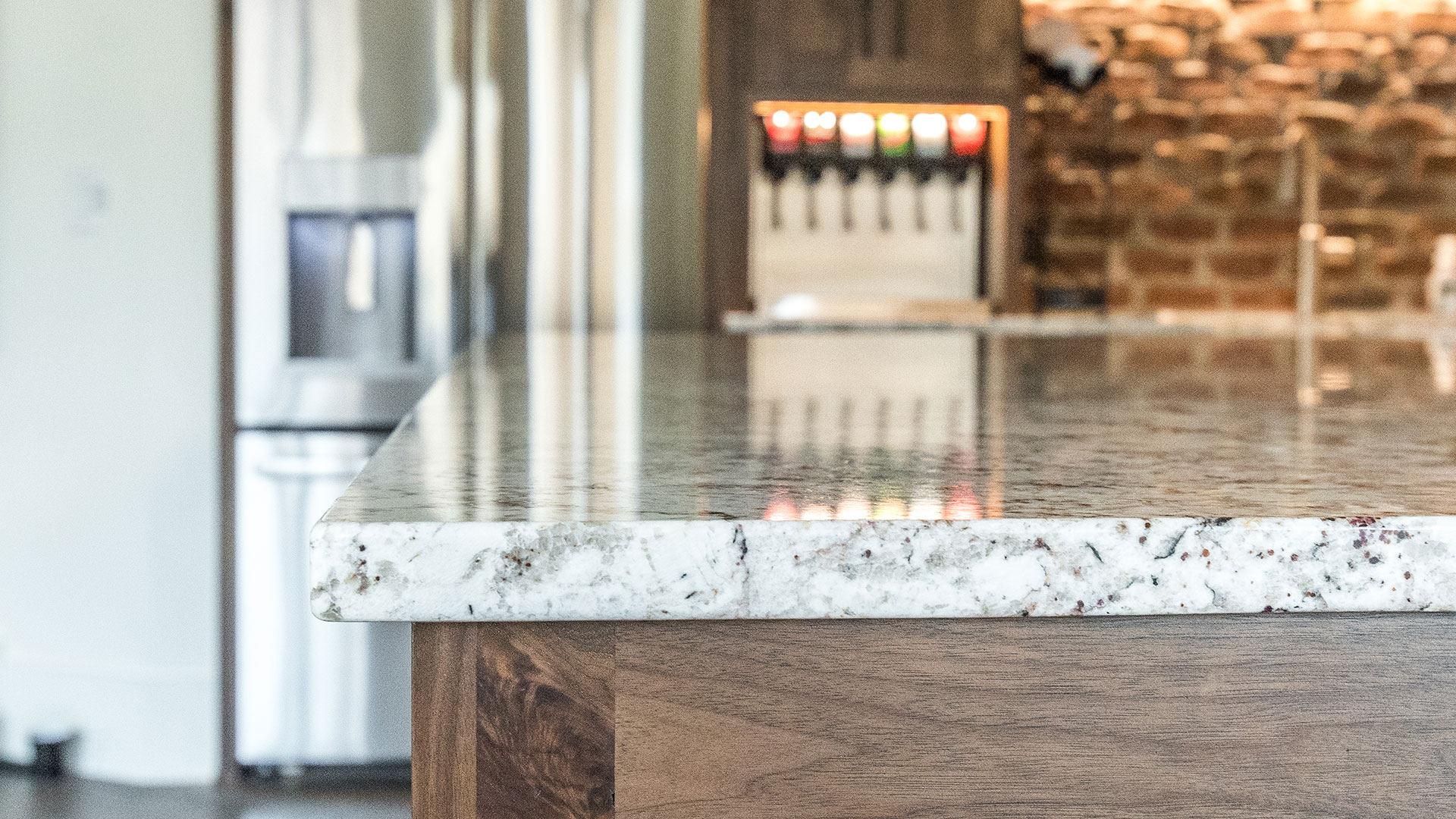
If you’ve been shopping for countertops lately, you’ve probably noticed quartzite popping up everywhere. It has the elegant veining of marble, the toughness of granite, and a price tag that feels almost too good to be true. So how does it stack up against granite, the tried-and-true classic that’s been anchoring kitchen designs for decades?
The honest answer: both are excellent. But they’re not the same, and which one fits your home comes down to a few key factors. Here’s what you need to know before you decide.
First, What’s the Difference?
Granite is an igneous rock, meaning it formed when magma cooled slowly deep underground. That process creates the speckled, crystalline look granite is known for, with flecks of quartz, feldspar, and mica throughout each slab.
Quartzite is a metamorphic rock. It starts as sandstone, then gets transformed over millions of years by intense heat and pressure. The result is one of the hardest natural stones available, with a flowing, veined appearance that many homeowners find reminds them of marble.
One quick note: quartzite and quartz are not the same thing. Quartz countertops are engineered, manufactured from ground quartz crystals mixed with resin. Quartzite is 100% natural stone, quarried and cut just like granite. Keep that distinction in mind when you’re comparing options at the showroom.
Durability: Both Are Tough, But They’re Tough Differently
Granite has a long track record in busy kitchens. It handles heat well, resists scratches better than most surfaces, and holds up to daily use without much fuss. It’s also slightly more stain-resistant out of the box compared to quartzite, which matters if your counters see a lot of cooking activity.
Quartzite is technically harder than granite on the Mohs scale, making it more resistant to chipping and wear over time. One of its standout advantages is that true quartzite won’t etch when it comes into contact with acidic foods like lemon juice or vinegar. Granite can be vulnerable to etching in some cases, so if you cook with a lot of citrus or tomatoes, that difference is worth noting.
Both materials are heat-resistant, though we still recommend using trivets. No stone is completely bulletproof, and the habit protects your investment.
Maintenance: Sealing Is Part of the Deal for Both
Both granite and quartzite are porous to varying degrees, which means both benefit from sealing. Annual sealing is the general recommendation, though high-traffic kitchens may need it more often. A quick test: drop a few water droplets on the surface. If they bead up, you’re in good shape. If they soak in, it’s time to reseal.
Day-to-day cleaning is straightforward for both. Mild soap and water is all you need. Avoid anything with bleach or lemon juice, and wipe up spills promptly, especially on lighter-colored quartzite, which can be more variable in how it handles staining depending on the specific slab.
Appearance: Two Very Different Looks
This is where the two stones really diverge, and where personal taste takes over.
Granite offers the widest color range of any natural stone. Blacks, whites, golds, blues, greens, deep reds. The look is bold and crystalline, with each slab carrying a pattern that’s completely unique. If you want a dramatic, high-character countertop that makes a statement, granite has a lot of range to work with.
Quartzite tends to run in lighter tones, whites, creams, soft grays, often with elegant flowing veins that read more like marble than granite. If you’re drawn to a cleaner, more refined look that still has movement and depth, quartzite is a natural fit. Popular varieties like Taj Mahal and Sea Pearl have a warmth and sophistication that’s hard to replicate with other materials.
One trend worth noting: in 2026, design pros are steering away from busy, speckled granite patterns in favor of natural stones with more subtle, organic movement. Quartzite fits that direction well. But classic, toned-down granite is still going strong, especially when paired with darker cabinetry.
Cost: Granite Is Generally More Accessible
Granite tends to have more budget-friendly options because it’s more widely available. You can find beautiful, durable granite slabs at a range of price points, from everyday to exotic.
Quartzite generally starts at the mid-range and moves up from there. It’s rarer, harder to cut and fabricate, and requires more precision during installation. For a lot of homeowners, the investment is worth it. But if budget is a primary factor, granite gives you more flexibility.
One strategy some homeowners use: quartzite on the island where it can shine as a focal point, with a complementary granite or other stone for the perimeter counters. It’s a smart way to get the look you want without stretching the budget across every surface.
So Which One Should You Choose?
Choose granite if:
- You want maximum color variety and a bold, dramatic look
- You’re working with a tighter budget and want the most options at each price point
- Your kitchen gets heavy use and you want a well-established track record for durability
Choose quartzite if:
- You love the veined, marble-like look but want something more durable and lower-maintenance
- Acid resistance matters to you, especially if you cook with citrus or wine often
- You’re designing around a lighter, more refined aesthetic and want a showstopper surface
Come See Both in Person
The best way to make this decision is to see the slabs in front of you. Photos don’t do natural stone justice. At Evolution Design in Logan, we carry both granite and quartzite and can walk you through the options that fit your kitchen, your lifestyle, and your budget.
Stop by our showroom or reach out to get the conversation started. We’re here to help you find the right stone, not just sell you one.