Marble has a way of making a kitchen or bathroom feel different from anything else. The veining is unmistakable. The way light moves across the surface gives it depth that engineered materials work hard to imitate. For homeowners in Cache Valley who are drawn to that look, marble is worth a closer look, but it also comes with trade-offs that are worth understanding before you commit.
At Evolution Design, we have helped homeowners across Logan, Smithfield, Providence, and the rest of Northern Utah find the right stone for their space since 2000. Marble shows up in our showroom for a reason: when it fits the project, nothing else compares. Here is what to know before you choose it.
What Is Marble?
Marble is a natural stone formed when limestone is exposed to high heat and pressure deep in the earth. That process recrystallizes the rock and creates the soft veining patterns marble is known for. Each slab is one of a kind, with mineral deposits creating the color variations and movement that no two pieces share.
Most marble is quarried in Italy, Greece, Turkey, and a few other countries with the right geology. The quarry, the depth of the cut, and the natural variation in the deposit all influence what a finished slab looks like. When you visit our gallery, you can see this firsthand. Two slabs of the same named marble can have very different personalities.
The Look That Sets Marble Apart
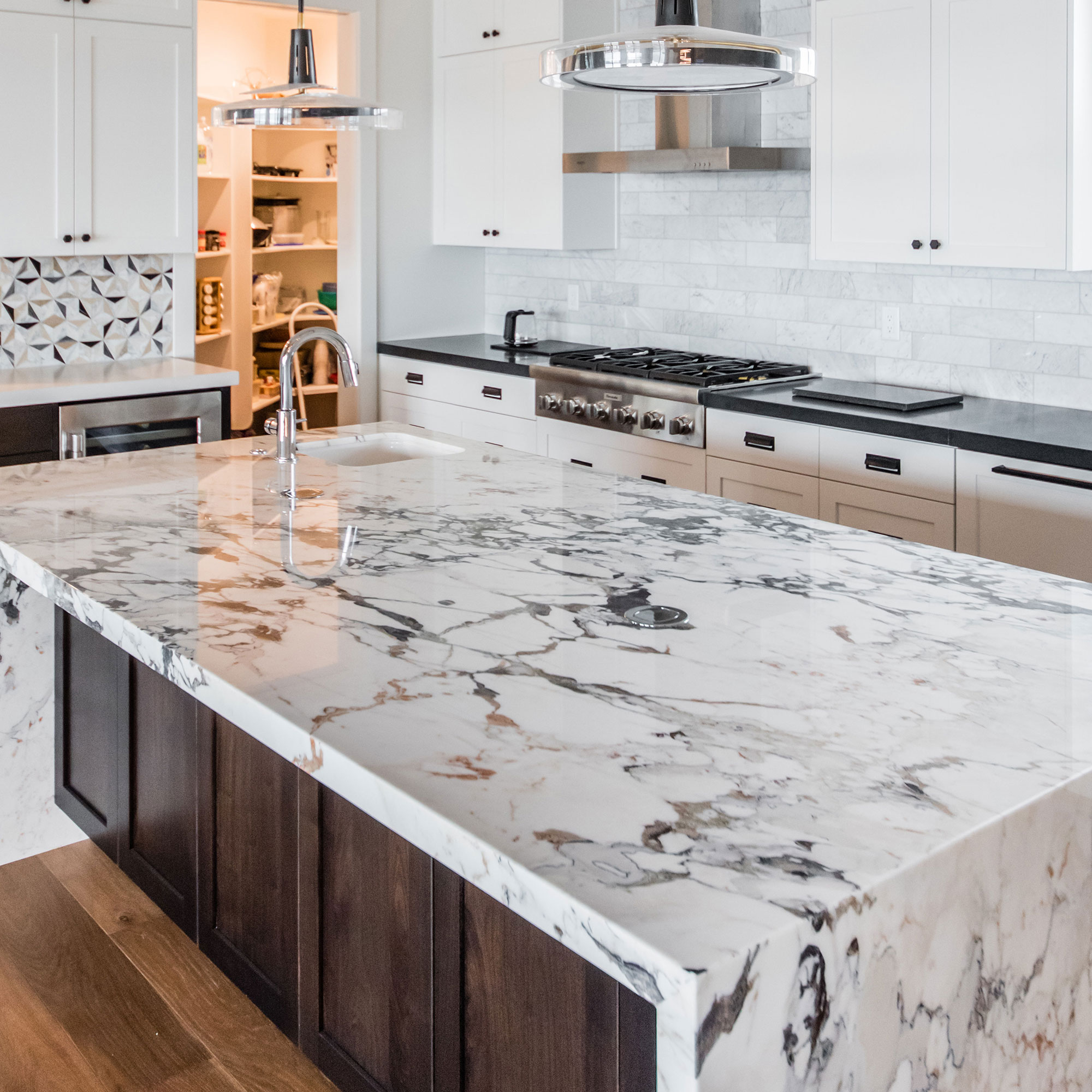
Marble offers a depth and softness that engineered stones cannot fully replicate. The veining is a record of how the stone formed, not a printed pattern, which means it carries through the full thickness of the slab. Edges, end caps, and waterfall panels all show the same veining as the surface.
Common colors and styles include:
- Carrara: light gray background with soft, feathery gray veining. The most recognizable marble look.
- Calacatta: bright white background with dramatic, bold veining in gray, gold, or warm tones. More striking and typically more expensive than Carrara.
- Statuary: white background with sharp, defined veining. Often used in high-end installations.
- Breccia and Emperador: warmer brown and tan tones with mosaic-style veining. A different mood than the cooler whites.
When you stop by our showroom, our team can walk you through what is currently in stock and help you compare side by side. Photos online never quite do it justice.
Pros of Marble Countertops
Timeless Beauty
Marble has been used in homes, churches, and public buildings for thousands of years for a reason. The look does not go out of style. If you want a surface that will still feel right in twenty years, marble is one of the safest aesthetic choices you can make.
Natural Heat Resistance
Marble handles heat better than most countertop materials. Hot pans will not melt or scorch the surface the way they can with engineered quartz. We still recommend using trivets to protect the seal and finish, but the material itself is heat tolerant.
Stays Cool
Marble naturally stays cooler than the surrounding air. This is one reason it is a favorite for bakers, since chilled dough is easier to work with on a marble surface. It is a small thing, but homeowners who bake regularly tend to love it.
Each Slab Is Unique
If having something one of a kind matters to you, marble delivers. No two slabs are identical. The piece you choose in our gallery is the piece that ends up in your home.
Cons of Marble Countertops
It Is Softer Than Granite or Quartzite
Marble is more porous and softer than granite or quartzite, which means it can scratch and etch more easily. Sharp knives, dragged pots, and dropped objects can leave marks that are harder to remove than on a harder stone. We always recommend cutting boards and trivets, but a kitchen with kids and high traffic may be tougher on marble than a primary bath or a dedicated baking station.
Etching from Acidic Foods and Cleaners
This is the biggest thing to understand before you choose marble. Acidic substances like lemon juice, vinegar, wine, tomato sauce, and many household cleaners react with the calcium carbonate in marble and leave dull, lighter-colored marks called etching. Etching is different from staining. It is a chemical reaction with the surface, not a discoloration that can be cleaned off.
Etching can be polished out by a professional, and many homeowners come to appreciate the patina that develops over time. Marble in a well-loved kitchen takes on a softer, lived-in look. If that idea bothers you, marble may not be the right choice. If it sounds like character, you are probably a good marble candidate.
Sealing Is Required
Marble is porous and needs to be sealed to resist staining. We recommend sealing once a year for kitchen applications and once every one to two years for baths. The process is straightforward and similar to sealing granite. We cover the steps in our guide on how to seal granite countertops, and the same approach applies to marble.
Where Marble Works Best
Marble is a great fit for:
- Master bathrooms and powder room vanities, where daily wear is lower than a kitchen
- Baking stations and dedicated pastry areas
- Fireplace surrounds and hearths, where the heat tolerance is a real benefit
- Accent islands paired with a more durable stone like quartz or quartzite on perimeter counters
- Bar tops and serving areas, where the look matters more than absolute durability
Marble can absolutely work in a primary kitchen. Plenty of homeowners use it there and love it. You just need to go in with realistic expectations about etching and the patina marble develops over time.
Marble Care and Maintenance
Caring for marble is straightforward once you know the rules:
- Wipe spills immediately, especially anything acidic like wine, citrus, or tomato sauce.
- Clean with a pH-balanced stone cleaner, never vinegar, lemon juice, ammonia, or bleach. We provide a bottle of EvoOxy Natural Cleaner with every install.
- Use cutting boards, trivets, and coasters as a habit, not as an emergency measure.
- Reseal annually for kitchen applications. Use the water test to check: if water beads up, the seal is good. If it soaks in, it is time to reseal.
- For etches or scratches, contact us. Most marks can be polished or honed out by a professional.
Marble vs. Quartzite: A Common Question
Homeowners who love the marble look but worry about durability often ask about quartzite. Quartzite is a harder natural stone that often resembles marble in appearance but is closer to granite in durability. If you want the white-and-veined aesthetic with less maintenance, quartzite is worth comparing. We covered the differences in our post on granite vs. quartzite, and the same considerations apply when comparing quartzite to marble.
That said, marble has a softness and depth that quartzite does not quite match. If you want true marble, choose marble. If you want the look with more forgiveness, quartzite is a strong alternative.
See Marble in Person at Our Gallery
Stone selection is hard to do online. Photos compress the depth and miss how the light catches the veining. Our 10,000 square foot gallery in Smithfield is the largest in Northern Utah, and we keep marble, granite, quartz, quartzite, and porcelain in stock so you can compare materials side by side.
If you are considering marble for a kitchen, bath, fireplace, or any other project, we would love to help you find the right slab. Schedule a consultation or stop by the showroom to see what is currently available. Our team can walk you through the trade-offs, the pricing, and the design choices that will make your project look the way you imagine it.
Ready to start your project? Contact Evolution Design or visit our gallery in Smithfield to explore our current marble selection.